

Open Journal of Applied Sciences
Vol.06 No.04(2016), Article ID:66044,11 pages
10.4236/ojapps.2016.64028
Mean Square Solutions of Second-Order Random Differential Equations by Using the Differential Transformation Method
Ayad R. Khudair, S. A. M. Haddad, Sanaa L. Khalaf
Department of Mathematics, Faculty of Science, University of Basrah, Basrah, Iraq

Copyright © 2016 by authors and Scientific Research Publishing Inc.
This work is licensed under the Creative Commons Attribution International License (CC BY).
http://creativecommons.org/licenses/by/4.0/



Received 21 March 2016; accepted 25 April 2016; published 28 April 2016
ABSTRACT
The differential transformation method (DTM) is applied to solve the second-order random differential equations. Several examples are represented to demonstrate the effectiveness of the proposed method. The results show that DTM is an efficient and accurate technique for finding exact and approximate solutions.
Keywords:
Random Differential Equations, Stochastic Differential Equation, Differential Transformation Method

1. Introduction
The ordinary differential equations which contain random constant or random variables are well known topics which are called the random ordinary differential equations. The subject of second-order random differential equations is one of much current interests due to the great importance of many applications in engineering, biology and physical phenomena (see, e.g. Chil’es and Delfiner [1] , Cort’es et al. [2] , Soong [3] and references therein). Recently, several first-order random differential models have been solved by using the Mean Square Calculus [2] [4] - [11] . Variety scientific problems have been modeled by using the nonlinear second-or- der random differential equations. However, most of these equations cannot be solved analytically. Thus, accurate and efficient numerical techniques are needed. There are several semi-numerical techniques which have been considered to obtain exact and approximate solutions of linear and nonlinear differential equations, such as adomian decomposition method (ADM) [12] , variational iteration method (VIM) [13] and homotopy perturbation method (HPM) [14] . We observe that semi-numerical methods are very prevalent in the current literature, cf. [12] - [14] .
The object of this work is to describe how to implement the differential transformation method (DTM) for finding exact and approximate solutions of the second-order random differential equations. To this end, the second-order random differential equations and the concept of the differential transformation method are presented in Section 2. In Section 3, we consider the statistical functions of the mean square solution of the second- order random differential equation. Section 4 is devoted to numerical examples.
2. Differential Transform Method
The differential transform method (DTM) has been used by Zhou [15] . This method is effective to obtain exact and approximate solutions of linear and nonlinear differential equations. To describe the basic ideas of DTM, we consider the second order random differential equation,
 (1)
(1)
 (2)
(2)
where ,
,  is an unknown function,
  is a nonlinear operator,
  is the
source in homogeneos term, and  and
and  are random variables.
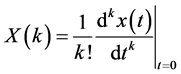
We now write the differential transform of function as
 (3)
(3)
In fact,  is a differential inverse transform of the form
 (4)
(4)
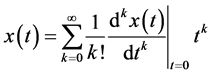
It is clear from (3) and (4) that the concept of differential transform is derived from Taylor series expansion. That is
 (5)
(5)
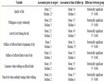
Differential transform for some functions.
Notes that, the derivatives in differential transform method does not evaluate symbolically.
In keeping with Equations (3) and (4), let ,
,  and
and , respectively, are the transformed functions of
 ,
,  and
and . The fundamental mathematical operations of differential transformation are listed in the following table.
3. Statistical Functions of the Mean Square Solution
Before proceeding to find the computation of the main statistical functions of the mean square solution of Equations (1) and (2) we briefly clarify some concept, notation, and results belonging to the so-called  calculus. The reader is referred to the books by Soong [3] , Loeve [16] , and Wong and Hajek [17] . Throughout the paper,
we deal with the triplet Probabilistic space . Thus, suppose
  is the set of second
order random variables. Then the random variable , if
, if , where
  is an expectation operator. The norm on is denoted by
 . For example, for the random variable X we define
 , in such way that
  is a Banach space. In addition, let T (real interval) represent
the space of times, we say that  is a second order stochastic process, if the random variable
  for each
 .
.
A sequence of second order random variables  converges to
 , if
, if 
To proceed from (4), we truncate the expansion of at the term as follows
 (6)
(6)
By using the independence between  and
and  we have
 (7)
(7)
 (8)
(8)
where 
The following Lemma guarantee the convergent of the sequence  to
to  and the sequence
 to
to  if the sequence the
  converges to
 .
.
Lemma [5] : Let  and
and  be two sequences of 2-r.vs X and Y, respectively, i.e.,
  and
and
 then
then . If
. If , then
 ,
, 
and .
.
4. Numerical Examples
In this section, we adopt several examples to illustrate the using of differential transform method for approximating the mean and the variance.
Example 1: Consider random initial value problem ,
,  and
and 
where  and independently of the initial conditions
  and
and  which satisfy
 ,
,  ,
,  ,
,  and
and .
.
The approximate mean and variance are


Figure 1 explain the Graph of the expectation approximation solution by using DTM with n = 18, while Figure 2 explain the Graph of variance approximation solution by using DTM with n = 18.
Example 2: Consider random initial value problem ,
,  and
and  where A is a Beta r.v. with parameters
  and
and , i.e.
  and the initial conditions
  and
and  are independent r.v.’s such as
 ,
,  ,
,  ,
, .
.
The approximate mean and variance are


Figure 3 explain the Graph of the expectation approximation solution by using DTM with n = 18, while Figure 4 explain the Graph of variance approximation solution by using DTM with n = 18.
Example 3: Consider the problem ,
,  and
and  whereA is a Beta r.v. with parameters
  and
and , i.e.
  and independently of the initial conditions
  and
and  which are independent r.v.’ satisfy
 ,
,  ,
,  ,
, .
.
The approximate mean and variance are


Figure 1. Graphs of the expectation approximation solution of the DTM with n = 18.

Figure 2. Graphs of variance approximation solution of the DTM with n = 18.

Figure 3. Graphs of the expectation approximation solution of the DTM with n = 18.


Figure 4. Graphs of variance approximation solution of the DTM with n = 18.
Figure 5 explain the Graph of the expectation approximation solution by using DTM with n = 18, while Figure 6 explain the Graph of variance approximation solution by using DTM with n = 18.
Example 4: Consider the problem ,
,  and
and  where A is a
uniform r.v. with parameters  and
and , i.e.
  and independently of the initial conditions
  and
and  which are independent r.v.’s satisfy
 ,
,  ,
,  ,
, .
.
The approximate mean and variance are


Figure 7 explain the Graph of the expectation approximation solution by using DTM with n = 18, while Figure 8 explain the Graph of variance approximation solution by using DTM with n = 18.
Example 5: Consider the problem ,
,  and
and  where A is auniform r.v. with parameters
  and
and , i.e.
  and independently of the initial conditions
  and
and  which are independent r.v.’s satisfy
 ,
,  ,
,  ,
, .
.
The approximate mean and variance are


Figure 9 explain the Graph of the expectation approximation solution by using DTM with n = 18, while Figure 10 explain the Graph of variance approximation solution by using DTM with n = 18.

Figure 5. Graphs of the expectation approximation solution of the HAM with n = 18.

Figure 6. Graphs of variance approximation solution of the HAM with n = 18.
Example 6: Consider the problem ,
,  and
and  where
where
A is a uniform r.v. with parameters  and
and , i.e.
  and independently of the

Figure 7. Graphs of the expectation approximation solution of the DTM with n = 18.

Figure 8. Graphs of variance approximation solution of the DTM with n = 18.
initial conditions  and
and  which satisfy
 ,
,  ,
,  ,
,  and
and .
.
The approximate mean and variance are

Figure 9. Graphs of the expectation approximation solution of the DTM with n = 18.

Figure 10. Graphs of variance approximation solution of the DTM with n = 18.


Figure 11 explain the Graph of the expectation approximation solution by using DTM with n = 18, while Figure 12 explain the Graph of variance approximation solution by using DTM with n = 18.5.
ConclusionIn this paper, we successfully applied the differential transform method to solve the second-order random

Figure 11. Graphs of the expectation approximation solution of the DTM with n = 18.

Figure 12. Graphs of variance approximation solution of the DTM with n = 18.
differential Equations (1)-(2) with coefficients which depend on a random variable A which has been assumed to be independent of the random initial conditions  and
and . This includes the computation of approximations of the mean and variance functions to the random solution. These approximations not only agree but also improve those provided by the Adomian Decomposition Method [12] , Variational Iteration Method [13] and Homotopy Perturbation Method [14] as we have illustrated through different examples. Otherwise, the differential transform method is very effective and powerful tools for the second-order random differential equation because it is a direct way without using linearization, perturbation or restrictive assumptions.
Cite this paper
Ayad R. Khudair,S. A. M. Haddad,Sanaa L. Khalaf, (2016) Mean Square Solutions of Second-Order Random Differential Equations by Using the Differential Transformation Method. Open Journal of Applied Sciences,06,287-297. doi: 10.4236/ojapps.2016.64028
References
- 1. Chiles, J. and Delfiner, P. (1999) Geostatistics: Modelling Spatial Uncertainty. John Wiley, New York.
- 2. Cortes, J.C., Jodar, L. and Villafuerte, L. (2009) Random Linear-Quadratic Mathematical Models: Computing Explicit Solutions and Applications. Mathematics and Computers in Simulation, 79, 2076-2090. http://dx.doi.org/10.1016/j.matcom.2008.11.008
- 3. Soong, T.T. (1973) Random Differential Equations in Science and Engineering. Academic Press, New York.
- 4. Cortés, J.C., Jódar, L. and Villafuerte, L. (2007) Mean Square Numerical Solution of Random Differential Equations: Facts and Possibilities. Computers and Mathematics with Applications, 53, 1098-1106. http://dx.doi.org/10.1016/j.camwa.2006.05.030
- 5. Cortés, J.C., Jódar, L. and Villafuerte, L. (2007) Numerical Solution of Random Differential Equations: A Mean Square Approach. Mathematical and Computer Modelling, 45, 757-765. http://dx.doi.org/10.1016/j.mcm.2006.07.017
- 6. Cortés, J.C., Jódar, L. and Villafuerte, L. (2007) Mean Square Numerical Solution of Random Differential Equations: Facts and Possibilities. Computers and Mathematics with Applications, 53, 1098-1106. http://dx.doi.org/10.1016/j.camwa.2006.05.030
- 7. Cortés, J.C., Jódar, L. and Villafuerte, L. (2009) Random Linear Quadratic Mathematical Models: Computing Explicit Solutions and Applications. Mathematics and Computers in Simulation, 79, 2076-2090. http://dx.doi.org/10.1016/j.matcom.2008.11.008
- 8. Villafuerte, L., Braumann, C.A., Cortés, J.C. and Jódar, L. (2010) Random Differential Operational Calculus: Theory and Applications. Computers & Mathematics with Applications, 59, 115-125.
- 9. Calbo, G., Cortés, J.C. and Jódar, L. (2010) Mean Square Power Series Solution of Random Linear Differential Equations. Computers and Mathematics with Applications, 59, 559-572.http://dx.doi.org/10.1016/j.camwa.2009.06.007
- 10. Cortés, J.C., Jódar, L., Villanueva, R.-J. and Villafuerte, L. (2010) Mean Square Convergent Numerical Methods for Nonlinear Random Differential Equations. Lecture Notes in Computer Science, 5890, 1-21. http://dx.doi.org/10.1007/978-3-642-11389-5_1
- 11. Cortés, J.C., Jódar, L., Villafuerte, L. and Company, R. (2011) Numerical Solution of Random Differential Models. Mathematical and Computer Modelling, 54, 1846-1851. http://dx.doi.org/10.1016/j.mcm.2010.12.037
- 12. Khudair, A.R., Ameen, A.A. and Khalaf, S.L. (2011) Mean Square Solutions of Second-Order Random Differential Equations by Using Adomian Decomposition Method. Applied Mathematical Sciences, 5, 2521-2535.
- 13. Khudair, A.R., Ameen, A.A. and Khalaf, S.L. (2011) Mean Square Solutions of Second-Order Random Differential Equations by Using Variational Iteration Method. Applied Mathematical Sciences, 5, 2505-2519.
- 14. Khalaf, S.L. (2011) Mean Square Solutions of Second-Order Random Differential Equations by Using Homotopy Perturbation Method. International Mathematical Forum, 6, 2361-2370.
- 15. Zhou, J.K. (1986) Differential Transformation and Its Applications for Electrical Circuits. Huazhong University Press, Wuhan.
- 16. Lo′eve, M. (1963) Probability Theory. Van Nostrand, Princeton, New Jersey.
- 17. Wong, E. and Hajek, B. (1985) Stochastic Processes in Engineering System. Springer Verlag, New York. http://dx.doi.org/10.1007/978-1-4612-5060-9